You've been thinking about it for a while. Maybe you've watched videos of people throwing pottery or cutting lino, and something in you said "I want to try that." But then the doubt kicks in: where do you even start? What if you're terrible? What if it's expensive?
Good news. Crafting is one of the most forgiving hobbies you can pick up, and it doesn't require much to begin. Here's what we've learned from welcoming hundreds of total beginners into the Likhaee community.
Choosing Your First Craft
Don't overthink this. Pick the thing that keeps catching your eye. If you scroll past knitting videos without stopping but linger on ceramics content, that's your answer. Your first craft doesn't have to be your forever craft; it just needs to be interesting enough to get you through the awkward early phase where nothing looks quite right.
Some crafts with low barriers to entry:
- Macrame — You need cord and something to tie it to. That's it.
- Lino printing — A block, a cutting tool, ink, and paper. Starter kits run about fifteen pounds.
- Hand embroidery — Fabric, a hoop, thread and a needle. Most charity shops have embroidery supplies.
- Candle making — Wax, wicks, fragrance, a pot. Surprisingly simple and immediately satisfying.
- Crochet — One hook and a ball of yarn. Hundreds of free patterns online.
Building a Basic Toolkit
The single biggest mistake new crafters make is spending too much money before they've confirmed they enjoy the process. You don't need premium supplies. You need functional ones.
Our advice:
- Buy the cheapest starter kit that has decent reviews. Don't invest in quality tools until you've finished at least three projects.
- Check charity shops, Freecycle and Facebook Marketplace before buying new. Crafters upgrade constantly, and their old kit is often perfectly good.
- Ask in communities (like ours) whether anyone has spare supplies. Makers are generous people.
- Use what you already have. Old t-shirts become fabric. Jam jars become candle vessels. Cardboard becomes templates.
The Fear of Being Bad
Here's something nobody tells you: every maker you admire was once terrible. The ceramicist with the beautiful Instagram feed? Her first ten bowls were wonky and uneven (she'll tell you herself if you ask). The difference between people who craft and people who think about crafting is simply that the first group was willing to make ugly things for a while.
Your first project will not be perfect. It's not supposed to be. It's supposed to teach you what the material feels like, how the tools respond to pressure, what happens when you rush versus when you're patient. That's the real product of your first few attempts: not a beautiful object, but knowledge stored in your hands.
Finding Your People
Crafting alone is fine. Crafting with others is transformative. When you're stuck, someone who's been doing it longer can unstick you in thirty seconds. When you're proud of something, having people who understand the effort means the world.
Options for finding community:
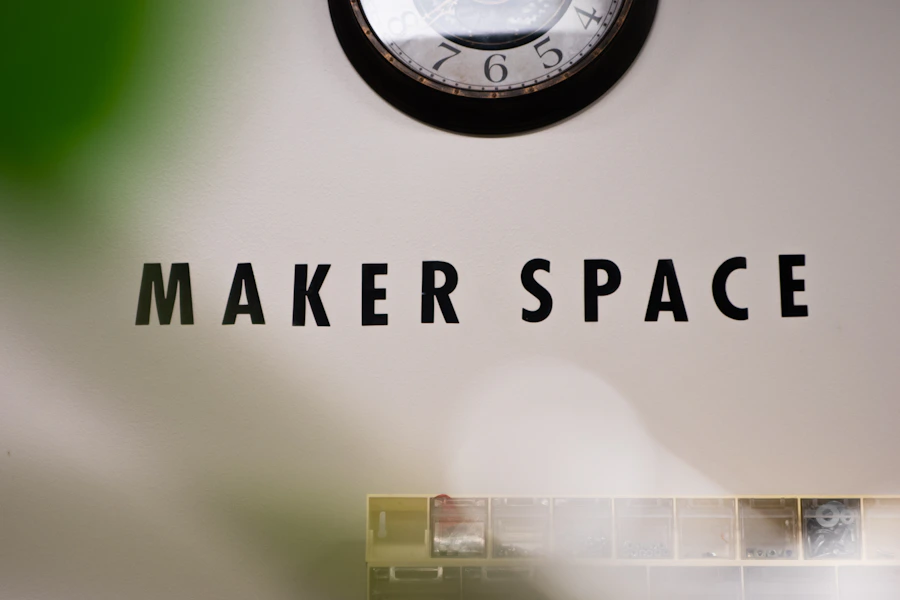
- Local maker spaces and open studios (like ours in Birmingham)
- Craft-specific groups on Facebook and Reddit
- Evening classes at community colleges and adult education centres
- Independent yarn shops, pottery studios, and art supply stores often host informal groups
Your First Project
Keep it small. Keep it finishable. The goal of your first project is not to create a masterpiece; it's to complete something from start to finish so you understand the full arc of the process. A finished imperfect thing beats an abandoned perfect vision every single time.
If you're near Birmingham, come along to one of our open studio days. Bring whatever you're working on, even if it's just an idea. We'll put the kettle on and point you in the right direction.
Meet Our Makers